







.jpg)
.jpg)
.jpg)
.jpg)
.jpg)
.jpg)
.webp)
.jpg)
.jpg)
.webp)
.jpg)
.jpg)
-scaled.jpg)
.webp)
.jpg)
.jpeg)
Göbekli Tepe – The World’s Oldest Temple
Introduction
Göbekli Tepe, located near Şanlıurfa in southeastern Turkey, is widely regarded as the world’s oldest known temple complex, dating back to around 9600 BCE. Predating Stonehenge by over 6,000 years and the Egyptian pyramids by 7,000, this archaeological marvel has transformed our understanding of human civilization. Far from being a simple gathering site, Göbekli Tepe suggests that organized religion and monumental architecture existed long before the rise of agriculture or settled communities.
The Discovery and Excavation
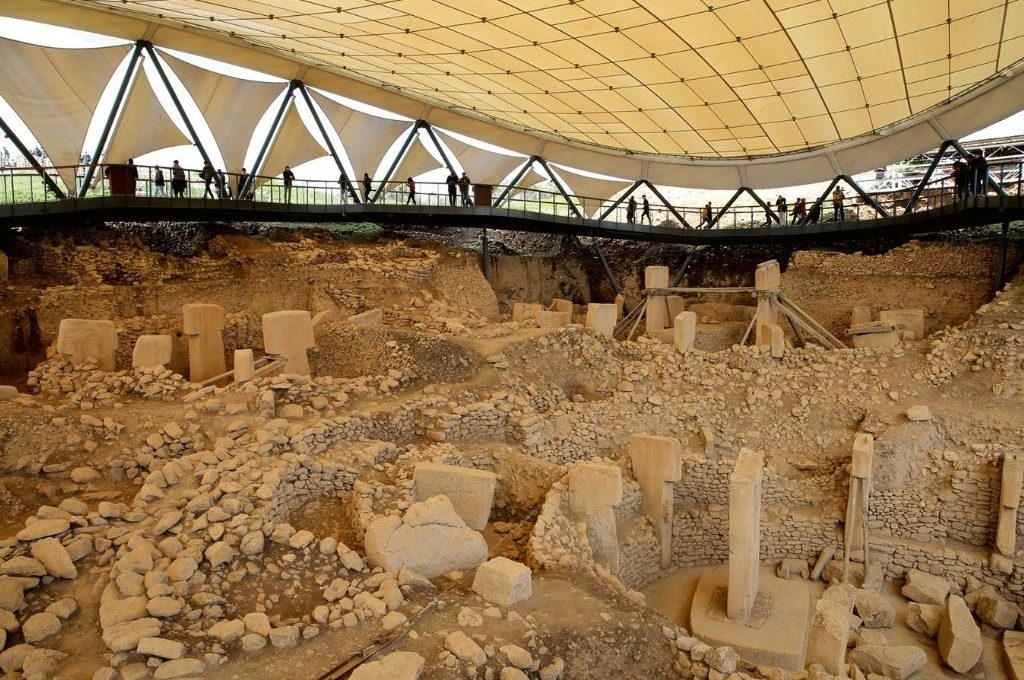
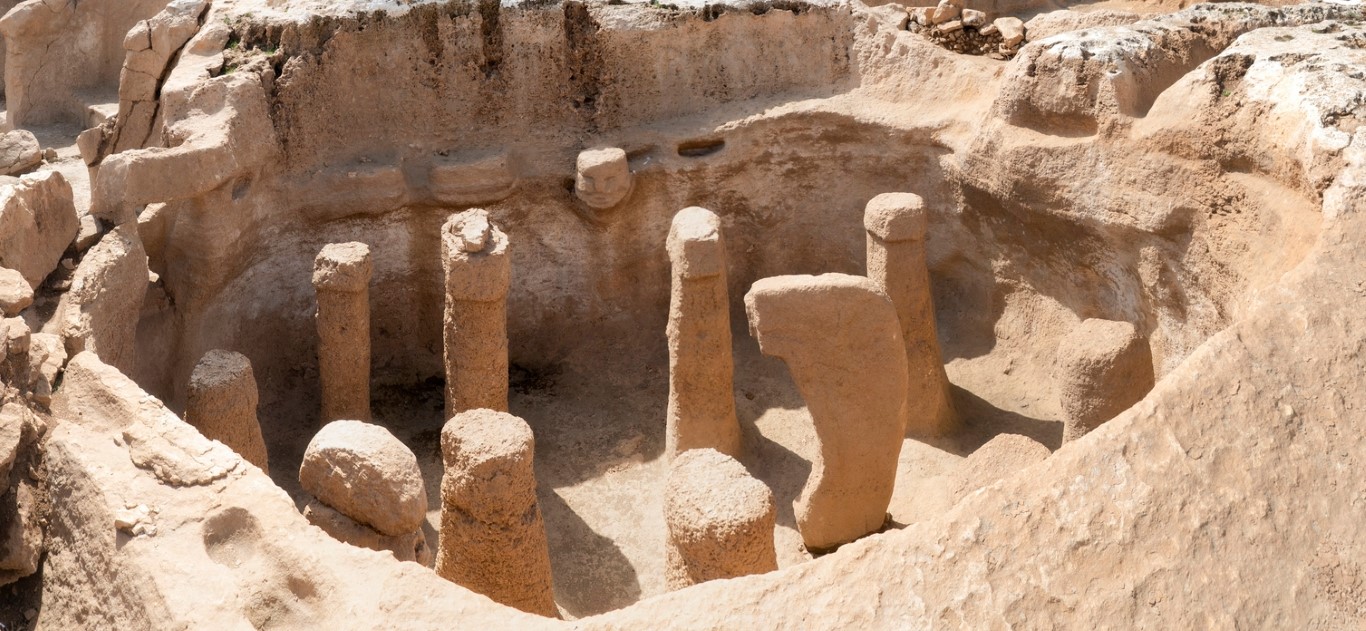
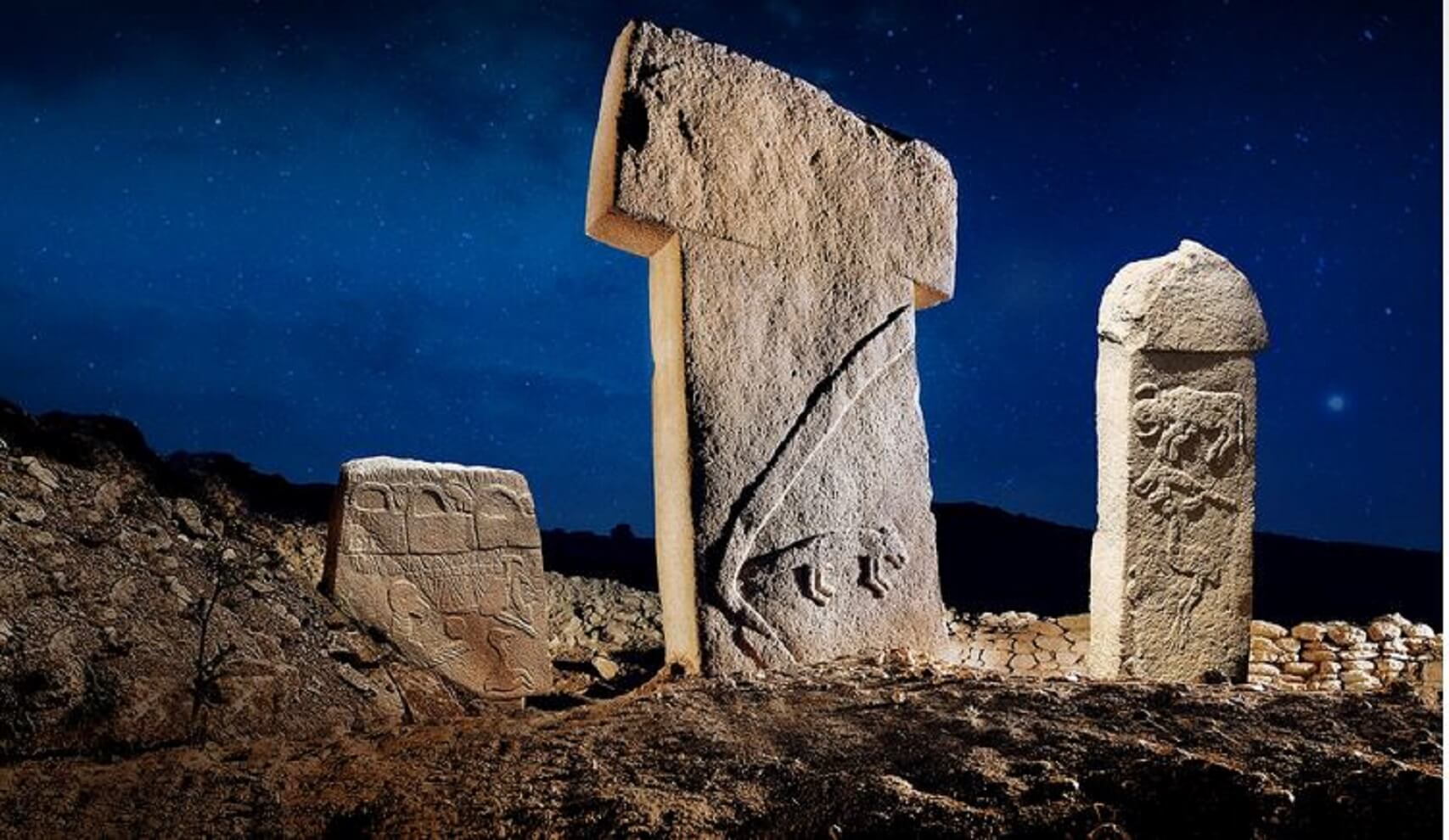
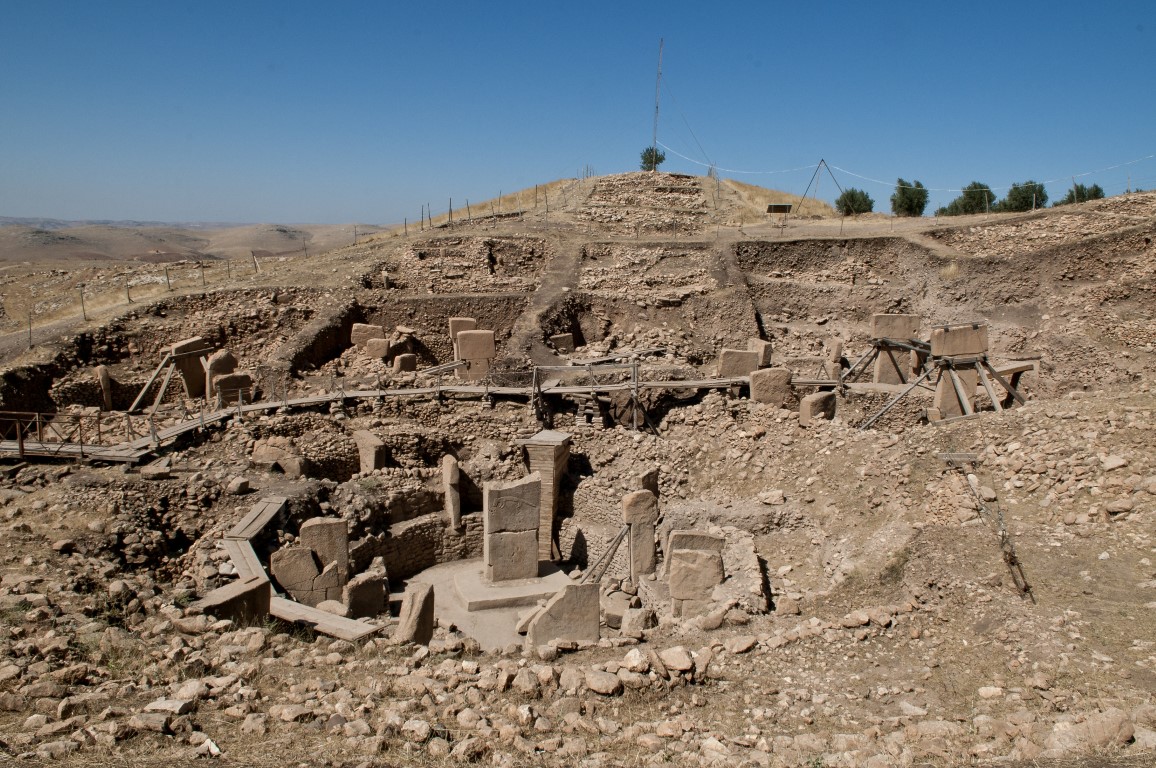
Although the site was first noted in the 1960s, its true significance came to light in the 1990s, thanks to the work of German archaeologist Klaus Schmidt. What appeared to be a simple hill revealed a vast prehistoric sanctuary, buried intentionally thousands of years ago. Excavations have since uncovered massive T-shaped limestone pillars—some weighing up to 20 tons—arranged in circular enclosures.
Each pillar is intricately carved with reliefs of animals, including foxes, vultures, snakes, wild boars, and cranes, as well as abstract symbols whose meanings remain unknown. These carvings offer a glimpse into the beliefs and rituals of early hunter-gatherers who created this sacred space with extraordinary precision and purpose.
A Window into Prehistoric Belief
Göbekli Tepe is not merely an archaeological site—it’s a profound testament to the human spirit’s early quest for meaning. The complexity of its design challenges previous assumptions that religion emerged only after agriculture and settled life. Instead, Göbekli Tepe implies that spirituality may have been the catalyst for civilization itself.
Scholars continue to debate its exact purpose. Was it a temple for communal worship, a site for astronomical observation, or a ritual gathering place? Whatever its function, it clearly served as a center of symbolic and spiritual activity at the dawn of human culture.
Visiting Göbekli Tepe
Location: 15 km northeast of Şanlıurfa, southeastern Turkey
Opening Hours: 8:00 AM – 7:00 PM (summer); 8:00 AM – 5:00 PM (winter)
Entrance Fee: Around €10
Facilities: Visitor center with interactive exhibits, café, and shuttle to the main site
Best Time to Visit: March–May or September–November for mild weather and fewer crowds
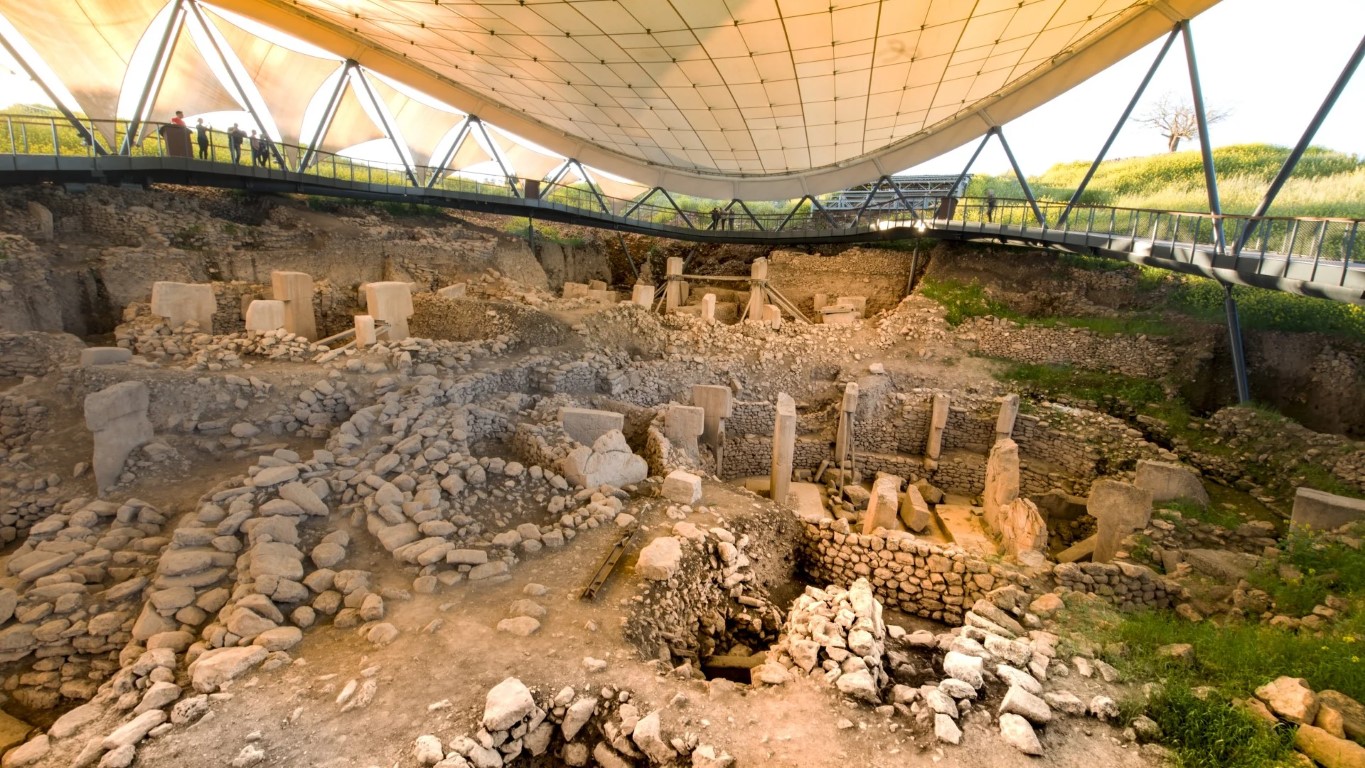
A modern protective canopy now shelters the excavated enclosures, allowing visitors to walk along raised platforms for panoramic views of the pillars. Informational displays explain the site’s ongoing discoveries, while the nearby Şanlıurfa Archaeology Museum houses original artifacts and detailed reconstructions.
Nearby Attractions
Şanlıurfa Archaeology and Mosaic Museum: Features artifacts from Göbekli Tepe and other Neolithic sites.
Balıklıgöl (Pool of Sacred Fish): A historic religious site associated with the prophet Abraham.
Karahan Tepe: A recently excavated site believed to be part of the same cultural network as Göbekli Tepe, offering even deeper insight into prehistoric Anatolia.
Why Visit Göbekli Tepe?
To witness the birthplace of monumental architecture and organized spirituality
To explore a site that rewrites human history and challenges long-held assumptions
To stand among pillars built by hunter-gatherers over 11,000 years ago
To experience the profound silence and mystery of a place that shaped human identity
Suggested Göbekli Tepe Visit Plan & Map
A visit to Göbekli Tepe can easily fill half a day, but combining it with nearby heritage sites around Şanlıurfa creates a full, immersive journey through the cradle of civilization.
🕰️ Morning – Göbekli Tepe Main Site
Start: Early morning (8 AM – 9 AM) to enjoy the site before tour buses arrive.
Entry & Shuttle: Arrive at the visitor center, view the introductory exhibits, then take the short shuttle to the summit.
Walking Route:
Visitor Platform A – Overview of the entire mound and its excavation zones.
Enclosure D – The oldest and most impressive circle, featuring twin 5.5-meter pillars with human-like arms in relief.
Enclosures C & B – Show progressively smaller rings and evolving architectural style.
Peripheral Area – Observe quarry marks and unfinished pillars showing ancient construction techniques.
Duration: 1.5 – 2 hours
Tip: Bring a hat and water; the hilltop is fully exposed to sun and wind.
🏛️ Late Morning – Şanlıurfa Archaeology Museum
Return to Şanlıurfa City (15 km) and spend an hour at the Archaeology & Mosaic Museum, one of Turkey’s largest.
See full-scale replicas of Göbekli Tepe enclosures, original carved pillars, and detailed site models.
Don’t miss the “Urfa Man,” a life-size limestone statue dating to 9000 BCE – the oldest known human sculpture in the world.
🌿 Afternoon – Balıklıgöl & Old Şanlıurfa Bazaar
Walk or taxi from the museum to Balıklıgöl (the Pool of Sacred Fish), revered in Abrahamic tradition.
Explore Halil-ur Rahman Mosque, shaded courtyards, and tranquil pools filled with sacred carp.
Continue into the covered bazaar to browse copperware, textiles, and local spices.
Try Urfa kebap or pistachio baklava at a nearby restaurant.
🏞️ Optional Extension – Karahan Tepe (1 hour east of Göbekli Tepe)
Recently opened to visitors, Karahan Tepe is part of the same prehistoric cultural network.
Features even older T-shaped pillars and enigmatic carved heads.
Reachable by car in ~75 minutes from Şanlıurfa (road via Harran Plain).
Guided tours (~€40–€60 pp) include transport and archaeologist briefing.
🗺️ Map Overview
Google Maps Coordinates
Göbekli Tepe: 37.2233° N, 38.9225° E
Şanlıurfa Museum: 37.1552° N, 38.7879° E
Balıklıgöl: 37.1523° N, 38.7905° E
Karahan Tepe: 37.3128° N, 39.3470° E
🚗 Practical Tips
Best Season: March – May and September – November for pleasant temperatures.
Transport: Taxis or private tours from Şanlıurfa; local buses run to Örencik village near the site.
Time Needed: Half day for Göbekli Tepe; Full day including Şanlıurfa highlights.
Photography: Allowed everywhere; tripods restricted inside museum.
Conclusion
Göbekli Tepe is more than an archaeological wonder—it is a sacred link to humanity’s earliest consciousness. Its towering pillars and cryptic carvings stand as silent witnesses to a time when humans first began to question their place in the cosmos. Visiting this ancient sanctuary is an encounter not only with prehistory but with the origins of belief, creativity, and civilization itself.
.jpg)
.jpg)
.jpg)
.jpg)
.jpg)
.jpg)
.jpg)
.jpg)
.jpg)
.webp)
.jpg)
.jpg)