









.jpg)
.jpg)
.jpg)
.webp)
.webp)
.jpg)
.jpg)
.webp)
.jpg)
.jpeg)
.webp)
.jpg)
.jpeg)
.jpg)
.jpg)
.jpg)
.jpg)
.jpg)
.jpg)
.webp)
.jpg)
.jpeg)
Pamukkale – The Cotton Castle of Turkey
Introduction
Meaning “Cotton Castle” in Turkish, Pamukkale is one of the most extraordinary natural and historical sites in the world. Located in Denizli Province, this UNESCO World Heritage Site is renowned for its dazzling white terraces formed by mineral-rich thermal waters cascading down the hillside. The result is a dreamlike landscape of travertine pools that shimmer in the sunlight, drawing travelers from around the globe to witness this masterpiece of nature and time.
The Travertine Terraces
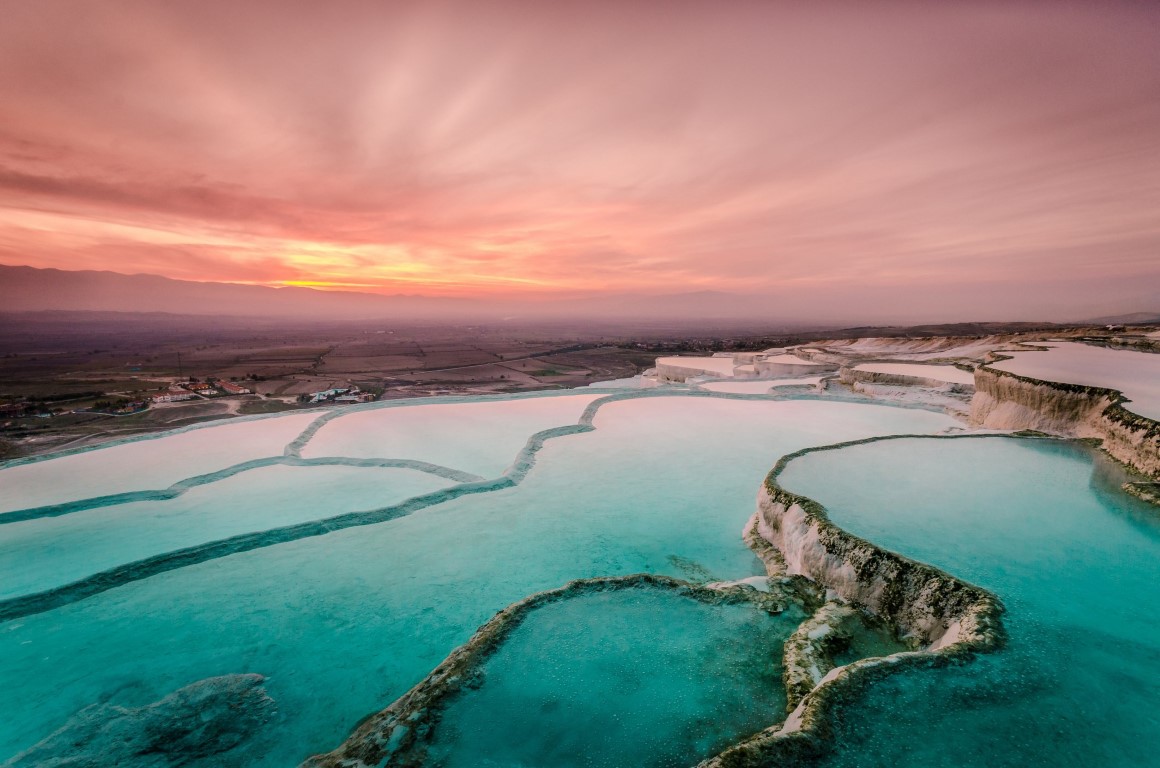
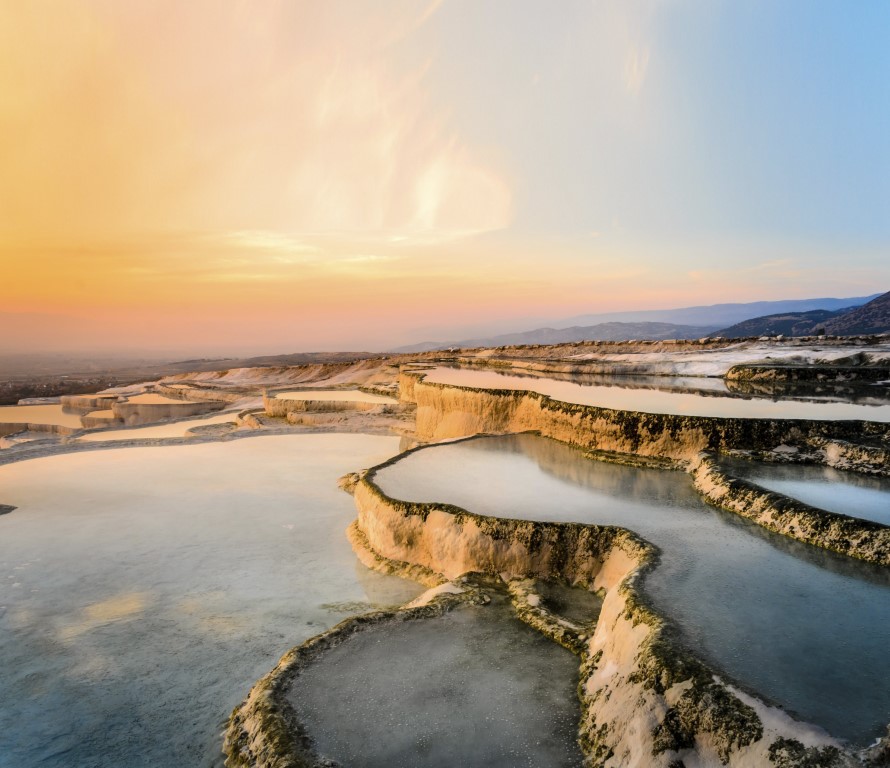
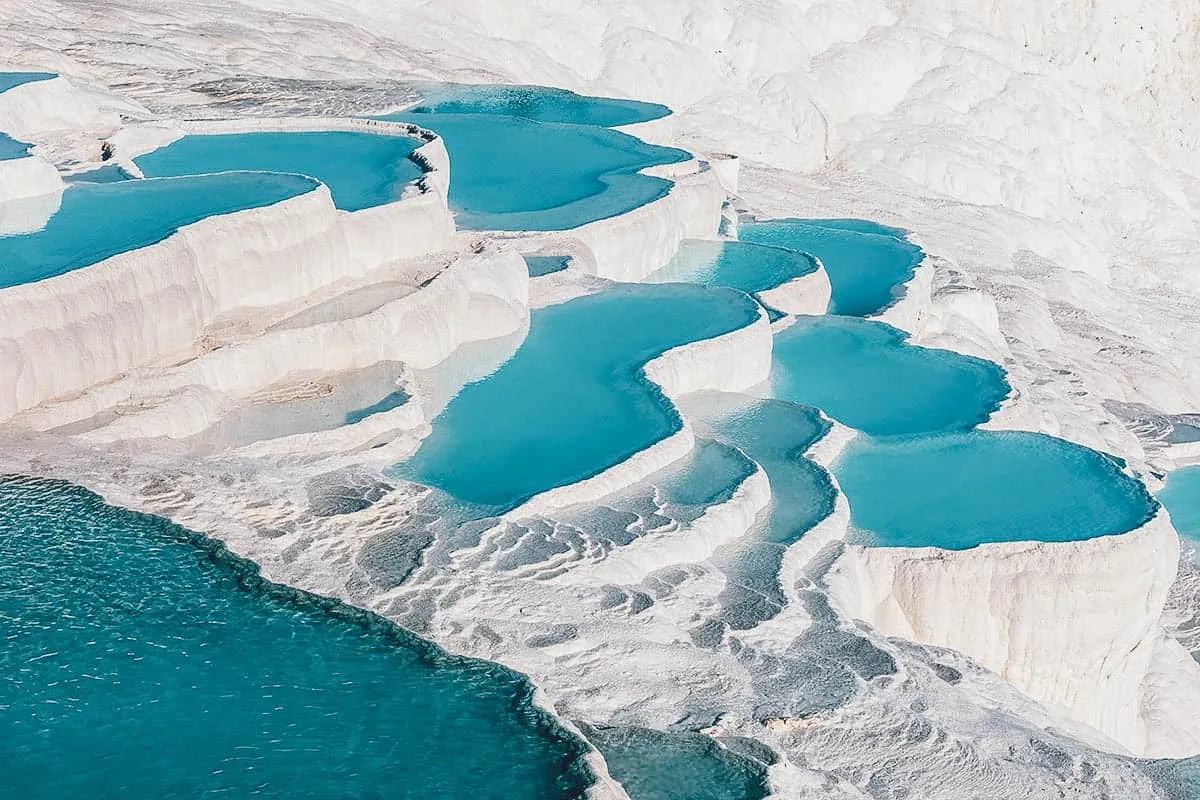
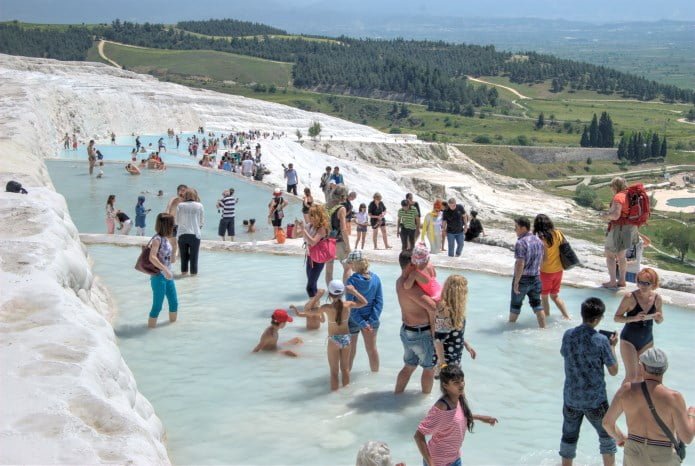
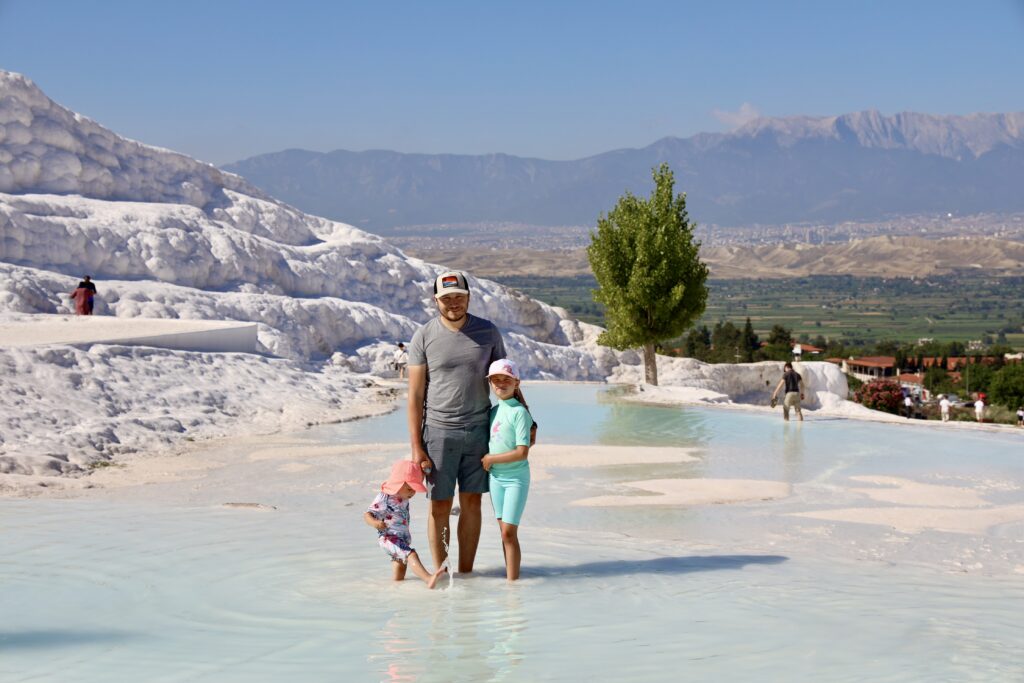
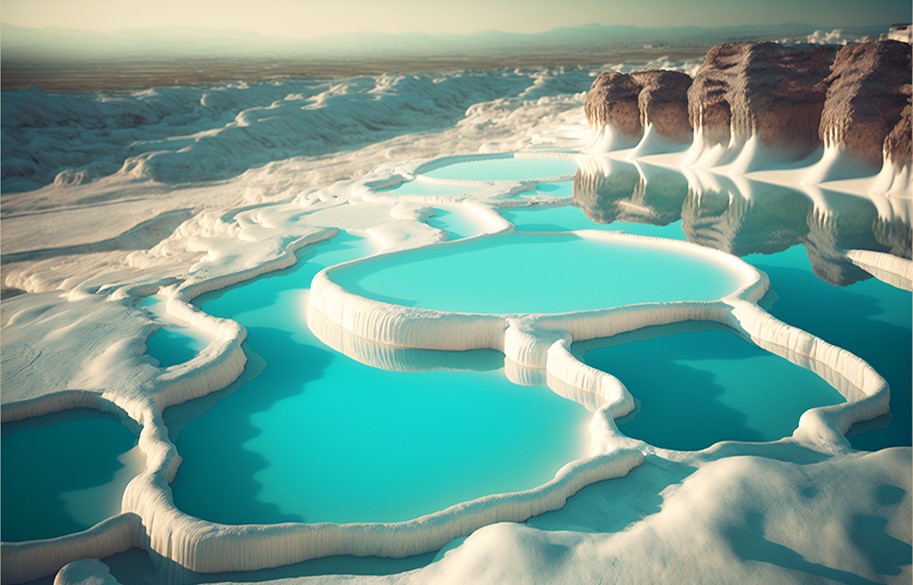
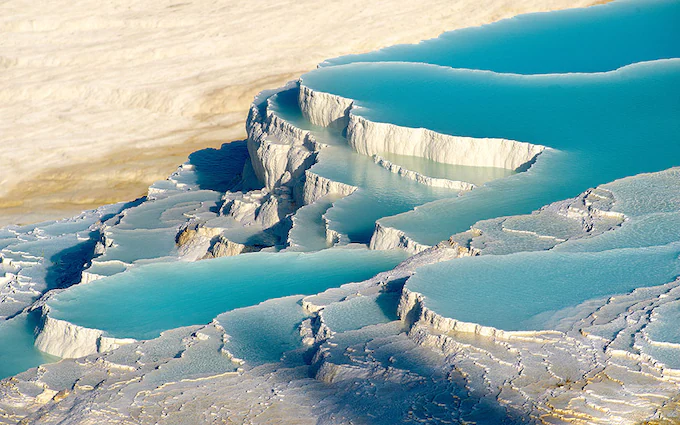
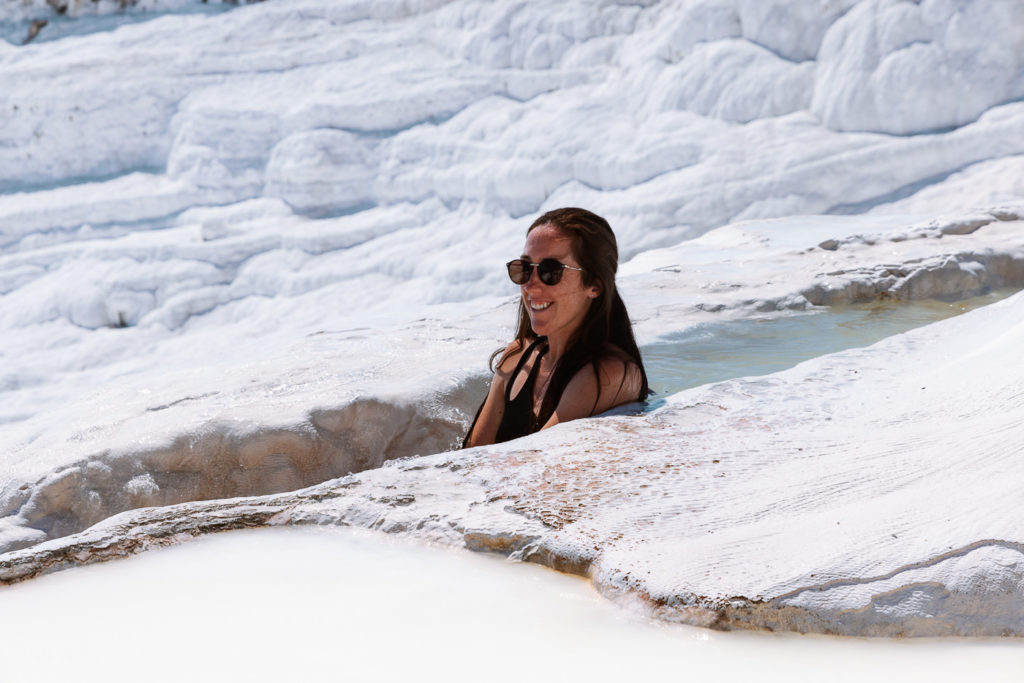
The terraces of Pamukkale are created by calcium-laden hot springs that flow from the mountain. As the water cools, it deposits layers of calcium carbonate, forming natural basins that harden into the gleaming white formations visible today. Visitors can walk barefoot along designated sections of these pools, feeling the warmth of the mineral water while admiring the surreal beauty of the landscape.
Water Temperature: Around 35°C (95°F)
Best Time to Visit: Early morning or late afternoon for soft light and fewer crowds
Visitor Tip: Bring swimwear for bathing areas and tread carefully—slippery surfaces are common.
The Ancient City of Hierapolis
Perched above the travertines lies Hierapolis, an ancient Greco-Roman spa city founded in the 2nd century BCE. It flourished for centuries as a healing center, where visitors from across the empire came to bathe in its therapeutic waters. Today, the ruins evoke the grandeur of its past, featuring:
Theatre: A beautifully preserved amphitheater seating over 12,000 spectators.
Temple of Apollo: Once the spiritual heart of Hierapolis.
Necropolis: One of the largest and best-preserved ancient cemeteries in Turkey.
Roman Baths and Colonnaded Streets: Offering a glimpse into everyday life in this once-thriving city.
The Hierapolis Archaeology Museum, housed within the former Roman baths, displays statues, sarcophagi, and artifacts unearthed from the site.
Cleopatra’s Antique Pool
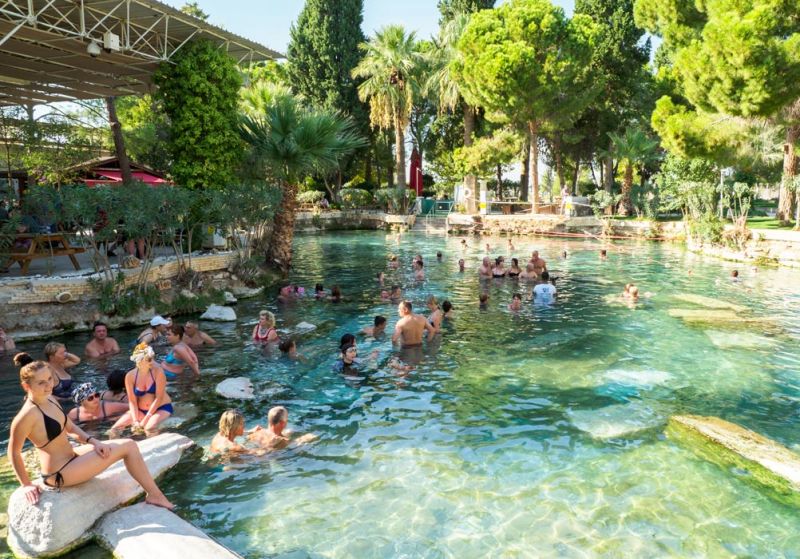
One of the highlights of visiting Pamukkale is the chance to bathe in the ancient thermal pool, often called Cleopatra’s Pool. Legend says that the Egyptian queen herself swam here. The pool’s crystal-clear water, filled with submerged marble columns from ancient temples, creates an atmosphere of timeless tranquility.
Temperature: 36°C (97°F) year-round
Entry Fee: Approximately €10–€15
Experience: Floating above centuries-old ruins surrounded by lush greenery.
Visiting Pamukkale
Location: 18 km from Denizli, Western Turkey
Getting There:
By Air: Denizli Çardak Airport (DNZ) connects to Istanbul and Ankara.
By Train/Bus: Frequent services from major Turkish cities to Denizli, with local minibuses to Pamukkale.
Opening Hours: 06:30 AM – 8:00 PM (seasonal variations apply)
Entrance Fee: Around €20 (includes access to travertines and Hierapolis)
Recommended Activities
Walk along the travertine terraces at sunset for the most spectacular photos.
Explore Hierapolis Theatre for panoramic views of the valley.
Visit Karahayıt Village, known for its red thermal springs.
Take a paragliding flight over Pamukkale for a bird’s-eye view of the white cascades and ancient ruins.
Why Visit Pamukkale?
To admire the unique white terraces formed by nature’s artistry.
To explore ancient Hierapolis, where history meets healing waters.
To bathe in Cleopatra’s thermal pool, a timeless wellness ritual.
To experience one of Turkey’s most iconic UNESCO World Heritage Sites.
Suggested Pamukkale Visit Plan & Map
A visit to Pamukkale and Hierapolis can be comfortably explored in one full day, but staying overnight in the nearby village allows visitors to enjoy the site at its quietest and most magical hours—sunrise and sunset. Below is a suggested route to make the most of this natural and historical wonder.
🕰️ Morning – Walk the Travertine Terraces
Start early to experience the white terraces in the soft light of morning, when crowds are minimal and the air is cool.
Entry Point: Southern Gate (closest to Pamukkale village).
Walk barefoot along the designated pathways—this preserves the travertine surface and allows visitors to feel the warm mineral water firsthand.
Stop frequently to admire the terraced pools, their colors shifting from white to turquoise depending on sunlight and mineral flow.
Tip: Carry light swimwear and a small towel; bathing is allowed in specific pools near the base.
🏛️ Late Morning – Explore the Ancient City of Hierapolis
After reaching the top of the terraces, continue into the archaeological site of Hierapolis, where the ruins of the Greco-Roman city spread across the plateau.
Key highlights include:
Theatre: With a seating capacity of over 12,000, offering panoramic views of the valley.
Temple of Apollo: Once dedicated to the city’s patron deity.
Plutonium (Sanctuary of Pluto): An ancient cave emitting natural gases once believed to be the gateway to the underworld.
Necropolis: Stretching over 2 kilometers, one of the largest ancient cemeteries in Anatolia.
The Hierapolis Archaeology Museum, housed inside the former Roman baths, provides an excellent introduction to the site’s history with marble sculptures and sarcophagi on display.
🏺 Afternoon – Relax at Cleopatra’s Antique Pool
After exploring Hierapolis, unwind in the Antique Pool (Cleopatra’s Pool), located near the museum.
Swim among submerged marble columns, remnants of ancient temples destroyed by earthquakes.
The thermal water, rich in calcium and magnesium, stays around 36°C year-round.
The pool is surrounded by cafés and shaded gardens, perfect for a midday rest.
Optional Add-On: Treat yourself to a traditional Turkish bath (hamam) or massage at one of the nearby spa hotels in Pamukkale village.
🌅 Evening – Sunset Over the Terraces
Before leaving, return to the travertine cliffs for one of the most stunning views in Turkey.
The western-facing slope of Pamukkale glows gold and pink as the sun sets behind the mountains.
Capture reflections in the still pools—a scene that has enchanted visitors for centuries.
Alternative Viewpoint: The northern terraces offer quieter vantage points with fewer crowds.
🏞️ Nearby Attractions
If you have an extra day, explore these sites within short driving distance:
Karahayıt Thermal Springs (5 km): Known for red-colored mineral water, ideal for therapeutic bathing.
Laodicea on the Lycus (12 km): An ancient city once part of the Seven Churches of Asia, featuring temples, stadiums, and colonnaded streets.
Denizli Town: Visit for local markets and textile shopping, including famous Turkish cotton products.
🗺️ Map Overview
Google Maps Coordinates:
Pamukkale Entrance: 37.9204° N, 29.1203° E
Hierapolis Theatre: 37.9242° N, 29.1229° E
Cleopatra’s Pool: 37.9251° N, 29.1215° E
Karahayıt Hot Springs: 37.9592° N, 29.0928° E
Laodicea Ruins: 37.8297° N, 29.0955° E
🚗 Practical Travel Tips
Best Visiting Hours: 7:00–10:00 AM or 5:00–7:30 PM (avoid midday heat).
Footwear: Must be removed on travertine paths to protect the natural formations.
Facilities: Restrooms, cafés, and lockers available near the South Gate.
Suggested Stay: 1–2 nights in Pamukkale village or Denizli city.
Conclusion
Pamukkale is a place where natural wonder and ancient civilization meet in perfect harmony. Its luminous terraces and sacred hot springs have captivated travelers for over two millennia, offering not just scenic beauty but also a tangible link to the ancient world. Whether you come to explore the ruins, relax in the warm waters, or simply watch the sunset over the cotton-white cliffs, Pamukkale promises a journey through both time and tranquility.
.jpg)
.jpg)
.jpg)
.jpg)
.jpg)
.jpg)
.jpg)
.jpg)
.jpg)
.jpg)
.jpg)
.jpg)